

Neelakurinji Blooms
A once in 12 years occurrence.
Munnar in Mesmerizing Blue Blooms
If you are a die-hard nature lover and travel enthusiast, the question everyone would ask you could be, “Where were you when the Neelakurinji bloomed?”. If you miss this event this time, you will have to wait another twelve long years to witness this natural phenomenon.
Once in twelve years, the hills and vales of Munnar literally turn blue-purple. It gets carpeted over by flowering shrubs of the Neelakurinji (Neela = blue, Kurinji = flower), blooming in profusion. Officially the blooming season of Neelakurinji is from August to October 2018.
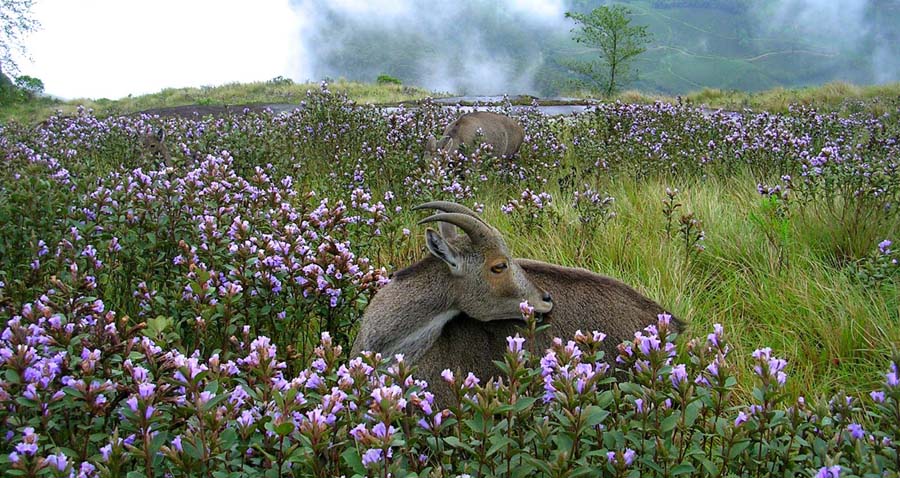

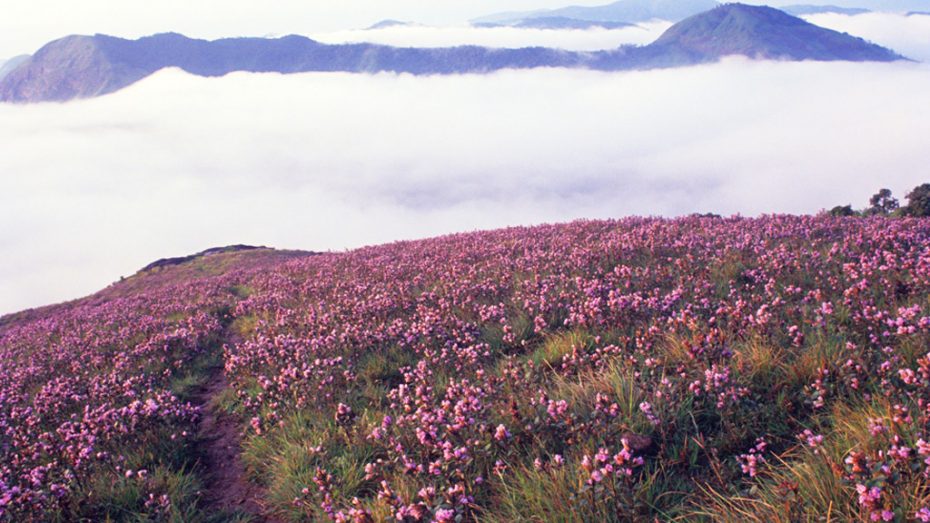
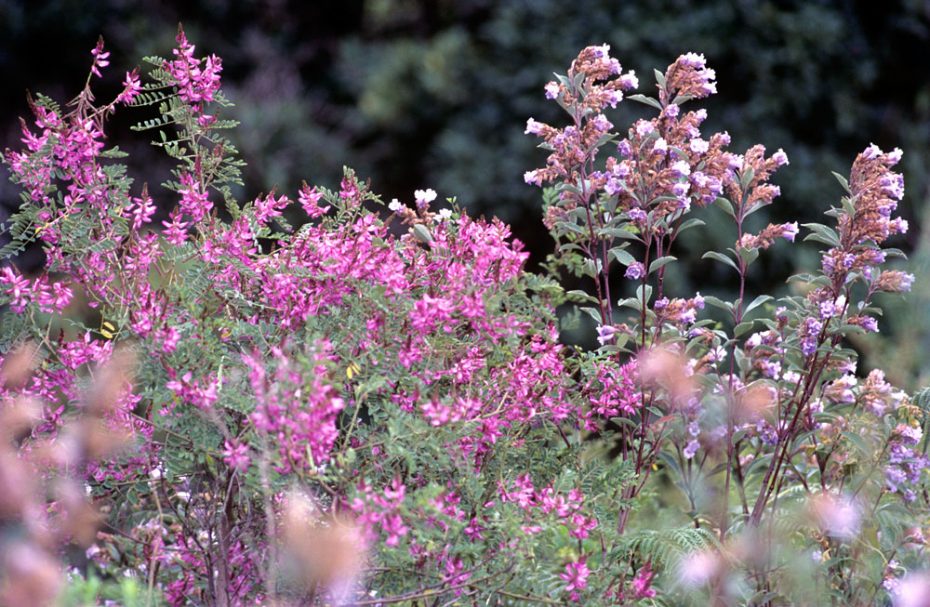
The botanical name for plants that flower en masse (gregariously) before dying are known as plietesials. The Neelakurinji belongs to the Plietesials and flowers only once every 12 years. It is also a species of Strobilanthes that display mass seeding phenomenon termed ‘masting’. Such plants only reproduce once during their lifetime and then die! The Strobilanthes genus has around 250 species of which around 49 are found in the Nilgiris alone, but they do not display these characteristics.
As the event has caught the imagination of tourists and attention of world media, a large number of visitors are expected. The core Kurinji blooming region covers approximately 32 km² core habitat of the Kottakamboor and Vattavada villages in and around Munnar.
The Neela Kurinji (Strobilanthes Kunthiana) is bushy shrub exclusive to the ‘Shola’ forests of the Western Ghats – the Nilgiris, 1600 m above sea level. The word ‘Kunthiana’ in the botanical name of the flower derives from the River ‘Kunthi’. The word ‘Neela’ denotes blue and ‘Kurinji’ denotes small flower, in the Malayalam language dialects of the tribals of the area.
The Kurinji flower has become a symbol of the rich bio-diversity and fragile eco-system of the Western Ghats. Munnar is blessed with forests, valleys, wildlife and rolling hills covered in tea plantations. For a tourist, there is the cool weather, beautiful breathtaking vistas, amazing wildlife and lots of activities to enjoy. Although the blooming happens in vast profusion only during the peak flowering season, the sporadic blooming of the flowers can be witnessed even earlier during June – July.
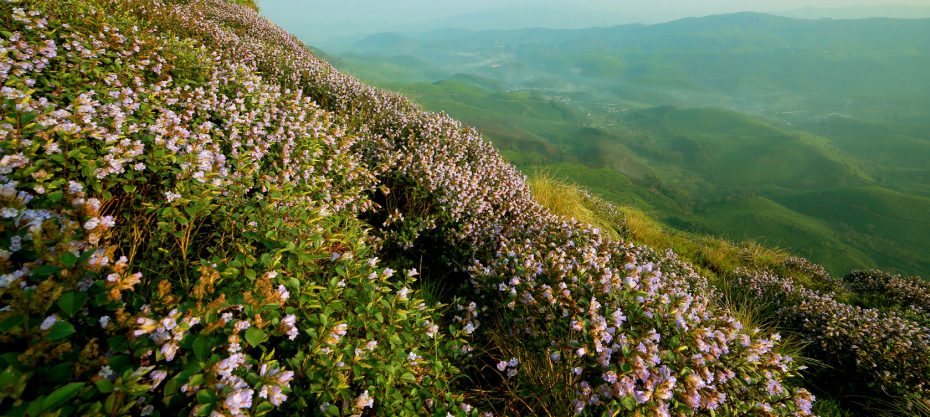
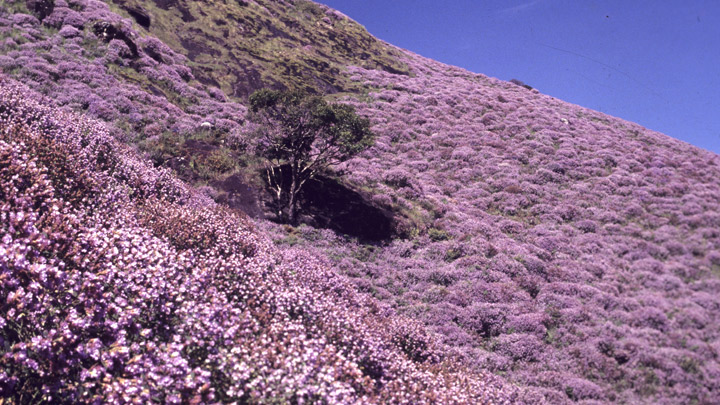
- You can enjoy natural scenic beauty of Munnar.
- Learn how tea is grown, plucked, dried and packaged into your favorite tea.
- Visit the Eravikulam National Park, home to the elusive Nilgiri Tahr.
- Visit the Anamudi Peak located South of the park.
- Visit the Rajamalai Wildlife Sanctuary.
- Be mesmerized by Lakkam Waterfalls.
- Witness the scenic offering of majestic views of tea, coffee and cardamom plantations at Pothanmedu.
- Experience sprawling lawns, exotic flora and fauna and the cool mountain air at Devikulam.
- Visit the famed dairy farm located at 1700 meters high above sea level, at Mattupetty.
- Enjoy the uninterrupted panorama of waterfalls and undulating hills of Attukal.
- Witness awe-inspiring sight of waters cascading down a hill from a height of around 1600 meters at Nyayamakad.